
India is likely to attract increasing notice from global investors.

Stocks of public sector undertakings (PSUs) have been on fire in the past year as investors cheered an improvement in key operating metrics and embraced counters of these state-owned enterprises, analysts suggest. The S&P BSE PSU Index has gained over 90 per cent in the past year, rising much higher than the S&P BSE Sensex, which has rose nearly 19 per cent during this period, according to ACE Equity data. The BSE PSU Index, reports show, has delivered a compound annual growth rate (CAGR) of 28 per cent (including dividends reinvestments) over five years and risen by almost 60 per cent in the past year.

'In India those who want change cannot bring about change, and those who can bring about change do not want change.'
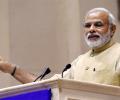
US State Department's report said that this has resulted in many investors retreating slightly from their once forward-leaning support of the BJP-led government

The International Monetary Fund (IMF) has said the tightening of monetary policy by India is an 'appropriate' step, as the country is faced with high inflation and needs to consolidate the fiscal measures initiated during the slowdown.
.jpg)
The report indicated that price rise will continue being a problem and that inflation, which is restricting the Reserve Bank from loosening its elevated policy rates.

The chapters were dropped by the Assam Higher Secondary Education Council (AHSEC) for the 2020-21 session, as part of the 30 per cent reduction of the syllabus, keeping in mind the loss of academic schedule that the students had to face because of the pandemic.

Hoping for an eight per cent economic growth, Prime Minister Manmohan Singh on Wednesday exuded confidence that India was on the "threshold of a new era of higher growth

Three members will be representatives from the government, and three from the RBI.

This is the full text of the address to the nation by President Droupadi Murmu on the eve of India's 78th Independence Day.

He said balancing the stimulus against the risks of inflation and threats to fiscal viability is a key short-term challenge.

There is no doubt that economic growth has picked up. It's also true that inflation has edged up. We had said at the beginning that sometime in the course of the year we would begin to slowly wind it down and what has happened is on course for that decision but exactly what, it's too early to say, says Montek Singh Ahluwalia.
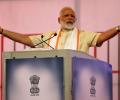
The GST's significance for the BJP's politics is as important as its implications for the Indian economy, says A K Bhattacharya.

In a pre-budget meeting with Finance Minister Arun Jaitley, the experts suggested timely implementation of the BJP's election manifesto promises to fix higher support prices. They also favoured a Kissan TV channel, an efficient procurement policy, priority for farm mechanisation and the linking of rivers.

Arvind Subramanian, a senior fellow at the Peterson Institute for International Economics, was informally recommended to the post by Finance Minister Arun Jaitley.
Moody's listed six agenda on the list of pending reforms -- land acquisition Bill, labour law reforms, significant infrastructure investment, tangible benefit from Make in India initiative, tax administration and PSU bank reforms
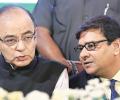
'The one sector where there is still a sense of crisis is banking, but the government has regrettably set its face against privatising any of the government-owned banks,' says T N Ninan.

The two governments have already set a target of increasing bilateral trade in goods and services to $500 billion.

After tabling the Survey, Jaitley told reporters that fiscal deficit for the current year will be 4.5 per cent which needs to go down further in the next two years.

If Mr Modi has to win, he must convince the people of this country how his reforms improved the quality of their lives.

As farmers continue their protests demanding repealing of the three new laws, Kumar also emphasised that continued negotiations with protesting farmers is of course the way forward.

On Aug 11, the Chinese central bank surprised markets by devaluing the yuan by nearly 2 per cent.

'A rag-tag coalition is more insecure and hence, more inclined to reform,' argues Devangshu Datta.

The implementation of four labour codes in one go from April 1 next year will usher in a new wave of reforms in industrial relations and also help in attracting more investments but employment generation will remain a key challenge in 2021. This year has also been a challenging year for the work force as well as for employers due to the outbreak of the COVID-19 pandemic. The government imposed a nationwide lockdown from March 25, which had an adverse impact on economic activities and resulted in exodus of migrant workers from large cities to their homes in the hinterland. Many migrant labourers lost their jobs and it took months for them to return back to their work places from their native places.

The former RBI deputy governor talked about the prospects of an economic revival, reforms in IMF, etc.
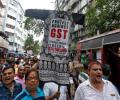
BMS, a union affiliated to RSS, plans rally at Delhi's Ramlila Ground on Nov 17; SJM to protest on Oct 29.
When the prime minister thanked his predecessor during his Independence Day speech, it was significant because it was Dr Singh's final acknowledgement that political support for reform is essential.

IMF expects growth to pick up to 7.2 per cent.
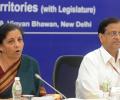
Subhash Chandra Garg, the former finance secretary who was shunted out of the finance ministry within three weeks of Modi-2.0 government's first budget last year, on Saturday alleged that new Finance Minister Nirmala Sitharaman got him transferred out.
India will unveil a single policy for foreign direct investment, including in sectors such as financial services, insurance and banking by March 31, Commerce and Industry Minister Anand Sharma has disclosed.

The Economic Advisory Council to the Prime Minister, of which he is chairman, has quickly sought to distance itself and the government from Dr Debroy's views.

India still has to go a long way to implement reforms in various sectors.

Indian companies struggle in face of a set of common challenges related to logistics, labour regulations, tax and tariff policy
The average rating was seven out of 10.

The central bank dashed hopes of any steep interest rate reduction.

Bangladesh is in turmoil, which is not good news for India, which shares a porous 4000 km border with it. There is a danger of fundamentalism growing there, and India has to move in to reset its ties with the new dispensation before China and Pakistan make capital out of it, alerts Ramesh Menon.

Among the Sensex firms, Larsen & Toubro, UltraTech Cement, JSW Steel, Titan, Bajaj Finance, Wipro, Tech Mahindra and Nestle were the major laggards. Maruti, Power Grid, Axis Bank, State Bank of India, NTPC, HDFC Bank, ITC and IndusInd Bank were the gainers.

Bankers seem to be pleased with the government for keeping its promise of not interfering in operational matters, but are apprehensive about the intense scrutiny of their functioning.

The Xi Jinping regime might try to quell internal distress by directing nationalism and militarism against India, warn Ajay Shah and Gautam Bambawale.

Till now, the maximum Bharat Ratnas were awarded in 1999 when four recipients were given the coveted award.
